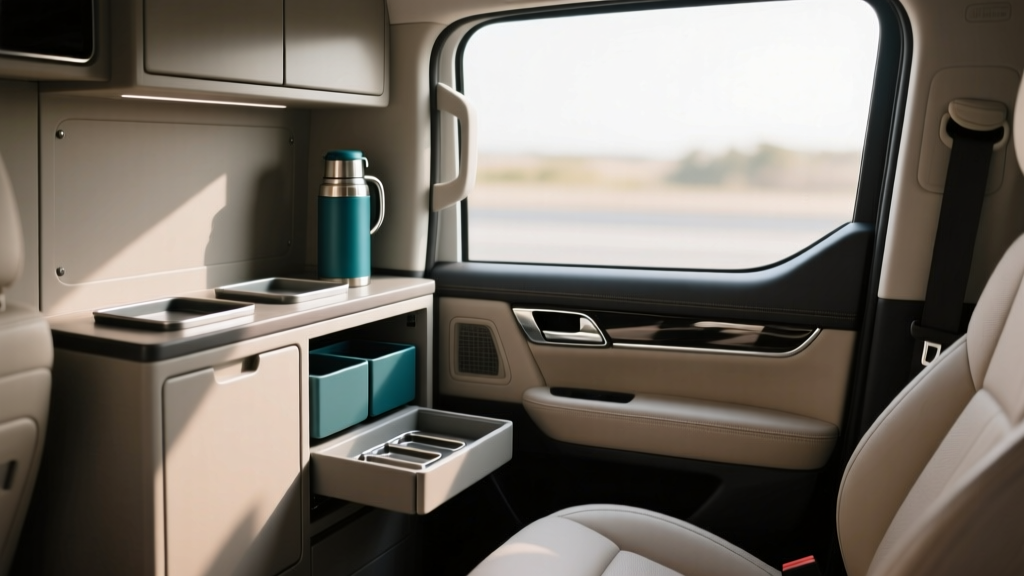
Commercial Vehicle Thermos Storage Guide - CarInteriorMix
For a lot of commercial drivers, a thermos isn?t a ?nice-to-have??it?s part of the daily toolkit. Whether you?re running deliveries, working a service route, driving a shuttle, or managing a fleet van, having hot coffee at 6 a.m. or cold water at 2 p.m. can make the difference between staying sharp and feeling drained. The tricky part is that commercial vehicle cabins aren?t always designed with thermos storage in mind?especially once you add clipboards, tablets, radios, PPE, and personal items.
Smart thermos storage is about more than convenience. A loose bottle can become a distraction, spill onto electronics, stain upholstery, or even turn into a projectile during hard braking. A good setup protects your interior, keeps drinks at the right temperature, and lets you grab what you need without taking your eyes off the road.
This guide breaks down practical thermos storage solutions for common commercial vehicles?vans, pickups, box trucks, and work SUVs?with step-by-step instructions, product-style comparisons, and real-world tips that hold up on busy routes.
Why Thermos Storage Matters in Commercial Vehicles
Safety: Preventing rolling bottles and driver distraction
Commercial driving often means frequent stops, uneven job sites, and tight parking. A heavy stainless-steel thermos can roll under pedals or wedge near the seat rails. Proper storage helps you:
- Keep the driver footwell clear
- Reduce ?reach-and-grab? distractions
- Prevent injuries from sudden stops or impacts
Interior protection: Spills, odors, and stains
Even a ?leakproof? lid can fail if it?s cross-threaded or bumped. Spills are especially damaging when they hit:
- Seat fabric seams and stitching
- Center console electronics and switches
- Rubber floor channels that trap sticky liquids
Efficiency: Faster access on the route
When your thermos lives in a consistent spot, it speeds up your routine. Drivers who set up a dedicated drink zone usually make fewer unnecessary stops and spend less time reorganizing the cabin.
Know Your Thermos: Size, Shape, and Lid Types
Before you buy organizers or mounts, check what you?re storing. ?Thermos? can mean anything from a 12 oz travel mug to a 64 oz vacuum-insulated jug.
Common thermos sizes seen in work vehicles
- 12?20 oz travel mug: Fits most factory cupholders; best for coffee/tea.
- 24?32 oz bottle: Often too tall or wide for OEM cupholders; common for water.
- 40 oz handled tumbler: Popular but awkward in tight cabins; tends to tip.
- 50?64 oz jug: Usually needs a dedicated strap or crate system.
Lid and leak risk factors
- Flip-top lids: Quick access, moderate leak resistance if worn.
- Screw caps: Strong leak resistance, slower to open.
- Straw lids: Convenient but can spill if knocked over.
- Push-button seals: Great when clean; can fail if debris gets in the gasket.
Real-world tip: If you work dusty environments (construction, landscaping), choose a lid with fewer moving parts and rinse the seal weekly. Fine grit chews up gaskets fast.
Best Thermos Storage Locations in Commercial Cabins
1) Factory cupholders (and how to make them work better)
OEM cupholders are convenient but not always sized for modern bottles. Improve stability with:
- Cupholder expanders/adapters: Add depth and grip for larger bottles.
- Silicone inserts: Reduce rattles and improve friction.
- Foam spacers: Good for narrow mugs that wobble.
2) Door pockets: good for tall bottles, risky for leaks
Door storage can fit taller bottles, but the angle and vibration can encourage leaks. Use door pockets for:
- Sealed bottles with screw caps
- Cold water (less sticky if it spills)
- Backup drinks, not your primary coffee
3) Center console organizers and seat-gap storage
If your cupholders are already occupied (keys, radios, small parts), a console organizer creates a defined space. Seat-gap fillers can also stop bottles from falling between the seat and console.
4) Behind-the-seat storage (crew cabs and vans)
Ideal for larger jugs or extra drinks. Options include:
- Soft-sided cooler bags strapped behind the seat
- Plastic milk-crate style bins with dividers
- Seat-back MOLLE panels (common in fleet setups)
5) Floor storage: only if properly restrained
Floor placement is common but risky. If you must store a thermos low, secure it using a strap or a fitted holder so it can?t roll into pedals or seat tracks.
Storage Solutions Compared: What Works Best for Different Work Vehicles
Work vans (Transit, Sprinter, ProMaster)
- Best option: Console-mounted cupholder expander + behind-seat crate
- Why: Vans often have flat floors and lots of cabin movement; crates prevent roaming gear.
- Watch out for: Sliding door vibrations?door pockets may rattle bottles loose.
Pickups (F-150, Silverado, Ram, Tacoma)
- Best option: Cupholder adapter + rear seat drink caddy for larger bottles
- Why: Many pickups have decent cupholders, but oversized tumblers still need support.
- Watch out for: Off-road job sites?use a non-slip base or strap system.
Box trucks and step vans
- Best option: Clamp-on cupholder mount or dash-side holder rated for vibration
- Why: Cab layouts vary widely; a universal mount offers consistency.
- Watch out for: Interfering with shifters, parking brake levers, or door clearance.
Work SUVs (Tahoe, Explorer, fleet crossovers)
- Best option: Cupholder insert + console organizer tray
- Why: These cabins tend to have tighter storage; organization prevents clutter.
- Watch out for: Tall bottles blocking infotainment controls or HVAC knobs.
Step-by-Step: Setting Up a Secure Thermos Storage System
Step 1: Measure your thermos and your storage spot
- Measure thermos base diameter and height.
- Measure cupholder diameter and depth (or door pocket width).
- Confirm clearance for shifting, steering wheel movement, and handbrake use.
Step 2: Decide your ?primary? and ?backup? drink zones
Set one location you can reach without leaning (primary), and one secondary spot for extra drinks.
- Primary zone ideas: front cupholder, console-mounted holder, dash-side mount
- Backup zone ideas: behind-seat crate, passenger footwell bin (restrained), door pocket (sealed bottles only)
Step 3: Choose the right holder type
Match the solution to your bottle and driving conditions:
- Frequent braking/stop-and-go: deep cupholder expander with grippy insert
- Rough roads/job sites: strap-secured holder or crate with dividers
- Multiple drivers (fleet): simple, universal mount that?s easy to clean
Step 4: Add anti-rattle and spill protection
- Add a silicone coaster or rubber insert to reduce vibration noise.
- Keep a microfiber towel or small absorbent pad in the console for quick cleanup.
- Use an all-weather mat if you regularly carry sugary drinks.
Step 5: Test it like a workday
Before you call it done, run a quick ?route simulation?:
- Hard brake test (in a safe, empty area)
- Sharp turn test
- Seat adjustment and entry/exit check
- One-handed grab-and-return test (parked)
Real-world example: A delivery driver using a 40 oz handled tumbler may find it ?fits? in a cupholder but tips during fast turns. Switching to a cupholder expander with stabilizing arms, or moving the tumbler to a strapped caddy behind the seat, usually stops the problem immediately.
Product-Style Recommendations: What to Look For (and What to Skip)
Rather than chasing a single ?best thermos holder,? focus on features that match commercial use: durability, easy cleaning, and secure fit.
Top features worth paying for
- Adjustable diameter: Fits different bottles and shared vehicles
- Deep well + stabilizers: Prevents tipping for tall bottles
- Non-slip rubber contact points: Reduces noise and wear on bottles
- Easy-wipe materials: Smooth plastics or rubberized surfaces
- Secure mounting method: Clamp, bolt-in, or tight insert (not loose ?universal? gimmicks)
Common thermos storage options (quick comparison)
- Cupholder expander: Best all-around upgrade for oversized bottles; great for pickups and SUVs.
- Seat-gap organizer: Good secondary storage; prevents drops; not ideal for heavy bottles on rough roads.
- Clamp-on holder: Great for box trucks and step vans; ensure it won?t interfere with controls.
- Crate/bin with dividers: Best for large jugs and multiple drinks; ideal behind seats in vans and crew cabs.
- Soft cooler bag: Best temperature support for long shifts; needs a stable spot and a strap to prevent sliding.
What to skip in a work vehicle
- Flimsy vent-clip drink holders: Can break vents and spill hot liquids onto controls.
- Cheap suction-cup mounts: Often fail in heat/cold cycles and vibration.
- Hanging hooks for heavy bottles: Swinging weight leads to spills and broken lids.
Commercial Cabin Practical Tips for Clean, Odor-Free Thermos Storage
- Use a dedicated ?drink towel?: Keep a small microfiber in the console to wipe condensation and drips.
- Weekly gasket check: Remove the lid seal, rinse, and re-seat it to prevent leaks and odors.
- Avoid storing open-top cups: If you?re working bumpy routes, choose a locking lid.
- Control condensation: Cold bottles sweat?use a silicone sleeve or keep them on a rubber mat.
- Separate drinks from paperwork: Keep route sheets, invoices, and devices in a different zone.
Common Mistakes to Avoid
- Storing the thermos on the driver floor: Even ?just for a minute? can turn into a pedal hazard.
- Assuming leakproof means spillproof: Lids loosen, seals wear, and straw tops tip easily.
- Overloading door pockets: Repeated slamming and vibration can crack lids or pop caps.
- Choosing a holder that blocks controls: A perfect fit doesn?t matter if it interferes with shifting or HVAC knobs.
- Ignoring cleaning access: If the holder is hard to remove or wipe down, it will get sticky fast.
- Not planning for passenger space: In shared vehicles, your thermos shouldn?t steal the only usable seat or footwell area.
FAQ: Commercial Vehicle Thermos Storage
What?s the safest place to store a thermos while driving?
The safest spot is a stable, dedicated holder within easy reach?typically a properly sized cupholder or cupholder expander. If your thermos doesn?t fit securely, use a stabilized adapter or a mounted holder rather than placing it on the seat or floor.
How do I keep a large 32?40 oz bottle from tipping in the cupholder?
Use a cupholder expander with adjustable grips and a deep base. Add a rubber insert to reduce wobble. If the bottle has a handle that catches on the console, rotate it so the handle faces away from your shifting hand.
Are door pockets okay for storing coffee?
They can be, but they?re better for sealed, screw-cap bottles than travel mugs. Door pockets tilt and vibrate, which increases leak risk?especially with flip tops or straw lids.
What?s the best solution for vans with limited front cupholders?
A two-zone setup works well: a front cupholder expander (primary) and a behind-the-seat crate or cooler bag (backup). This keeps the drink accessible while preventing extra bottles from roaming the cabin.
How can fleets keep thermos storage consistent across multiple drivers?
Standardize a universal solution?like the same cupholder expander model in each unit?and pair it with easy-to-clean liners. Keep placement consistent so drivers don?t waste time searching or reconfiguring the cab.
What should I do if my thermos keeps leaking in the vehicle even though it?s ?new??
First, inspect and rinse the gasket, then re-seat it carefully. Check for cross-threading on screw tops and ensure the lid is fully locked. If it still leaks, avoid storing it in door pockets and switch to a more secure holder that keeps it upright.
Next Steps: Build a Thermos Setup That Works as Hard as You Do
Start by identifying your primary drink spot and making it stable?most drivers get the biggest improvement from a quality cupholder adapter or expander. Then add a backup zone behind the seat or in a secured bin for extra bottles and longer shifts. A few small upgrades?rubber inserts, dividers, and a wipe-down routine?go a long way toward keeping your commercial cabin clean, safe, and comfortable.
If you?re upgrading your daily driver or refining a fleet interior, explore more practical cabin organization and protection guides on carinteriormix.com.